
Ketamine therapy attracts attention as a rapid-acting treatment for depression, anxiety, and chronic pain conditions. Patients often notice significant symptom relief that contrasts sharply with slower-acting traditional medications.
Clinicians administer ketamine intravenously or through intranasal devices in carefully controlled medical settings. Each session follows strict dosing protocols that maximize therapeutic benefits and ensure patient safety.
Why you might feel tired the day after ketamine treatment? Some patients notice persistent fatigue the day after treatment because their bodies react to multiple physiological changes. These changes affect energy levels and explain why alertness may remain lower than usual.
Physiological Impact on Energy Levels
The body reacts to ketamine through several neurological and cardiovascular pathways that influence energy levels. These reactions often explain why patients feel tired after treatment sessions.
Ketamine interacts with NMDA receptors and changes glutamate signaling within the brain. These chemical adjustments temporarily affect cognition, mental clarity, and overall vitality in patients.
- Brain Chemistry Alterations
Ketamine modulates excitatory and inhibitory pathways in the central nervous system during administration. Patients experience temporary cognitive fatigue while neurons adjust to chemical changes.
| Neurotransmitter | Ketamine Effect | Functional Impact | Duration |
| Glutamate | Increases excitatory signaling | Enhances synaptic plasticity but causes temporary mental cloudiness | 4–6 hours |
| GABA | Modulates inhibitory pathways | Reduces overstimulation and contributes to mental fatigue | 4–6 hours |
| Dopamine | Elevates concentration and motivation | Improves mood but may create mild post-treatment lethargy | 24 hours |
| Serotonin | Slight increase | Stabilizes mood but may slightly affect sleep patterns | 12–18 hours |
Some patients report mental cloudiness, slowed thinking, or difficulty concentrating after treatment sessions. Clinicians observe that these effects usually diminish within 24 hours but vary among individuals.
Dose and administration methods determine the intensity of cognitive changes. Clinicians monitor patient response carefully to prevent overstimulation or post-treatment exhaustion.

- Hormonal Fluctuations
Ketamine affects hormone levels, including cortisol and other stress-related compounds in the body. These shifts in hormone balance contribute to post-treatment tiredness and low energy.
Sleep cycles change after ketamine therapy, affecting REM and non-REM stages. Even minor disruptions in sleep patterns increase fatigue the following day.
Clinicians track these changes and adjust dosing schedules when necessary. Individualized treatment plans help patients maintain energy while achieving therapeutic benefits.
- Cardiovascular Effects
Ketamine administration increases heart rate and blood pressure during infusion sessions. The cardiovascular response consumes energy and leaves patients feeling drained afterward.
Patients sometimes experience mild hypotension, dizziness, or lightheadedness after treatment. Medical staff provide observation to ensure safety before patients leave the clinic.
Metabolic and Cellular Considerations
The liver metabolizes ketamine into active compounds that affect multiple body systems. These compounds influence energy availability and contribute to post-treatment fatigue.
Neuronal activity consumes energy as the body processes ketamine metabolites. Patients often feel tired even when they rest adequately after sessions.
- Liver Metabolism and Clearance
Liver enzymes convert ketamine into norketamine and other metabolites that produce clinical effects. Efficient metabolism reduces the intensity and duration of post-treatment fatigue.
Patients with slower metabolism experience grogginess or mild lethargy for longer periods. Clinicians evaluate metabolic rates to determine safe intervals between treatment sessions.
Adequate hydration and balanced nutrition support liver function and metabolite clearance. Patients recover faster and feel less fatigue when they maintain proper fluids and meals.
- Neurotransmitter Rebalancing
Ketamine alters glutamate and GABA levels, affecting excitatory and inhibitory signaling in the brain. These chemical changes consume energy and leave patients temporarily depleted.
Patients notice slowed focus or mild mental cloudiness as neurotransmitters return to baseline. Short rest periods allow faster normalization of cognition and mental clarity.
Clinicians monitor neurotransmitter effects to determine optimal dosing and recovery strategies. Patients benefit from structured rest and low-stress environments during the post-treatment period.
- Cellular Energy Demands
Neurons require significant energy to adjust synaptic signaling after ketamine exposure. This cellular adaptation contributes directly to fatigue and mild lethargy.
Patients restore energy more efficiently when they reduce physical and mental strain after sessions. Short periods of quiet rest allow the body to regain energy reserves.
Clinicians emphasize energy management as part of recovery guidance. Patients who pace their activities experience smoother and faster post-treatment recovery.
Psychological and Behavioral Influences
Mood changes after ketamine infusion affect perceived energy levels the following day. Emotional relief or heightened awareness can feel mentally exhausting for some patients.
Patients sometimes notice temporary detachment or mild emotional blunting. These psychological effects amplify fatigue even when physical activity remains minimal.
- Stress Response and Fatigue
Ketamine alters the hypothalamic-pituitary-adrenal axis, changing stress hormone regulation temporarily. Cortisol fluctuations reduce resilience and increase susceptibility to tiredness in patients.
Some patients experience brief irritability or low motivation after treatment. Clinicians advise lighter schedules to prevent fatigue from affecting daily activities.
Healthcare providers evaluate stress responses across multiple sessions to optimize care. Patients who follow recommendations often notice improved energy and faster recovery.
- Sleep Quality and Recovery
Post-treatment sleep frequently changes in duration, depth, and quality. Altered sleep cycles increase next-day fatigue or grogginess in many patients.
Short naps during the day restore alertness and improve cognitive function. Establishing consistent bedtime routines enhances energy restoration and supports overall well-being.
Clinicians provide guidance to improve sleep quality after ketamine treatment. Patients who adopt these strategies recover energy more efficiently and feel clearer mentally.
- Perception and Mindset
Patients sometimes interpret mild fatigue as severe because heightened awareness amplifies sensations after therapy sessions. Cognitive focus during treatment can make tiredness feel stronger.
Rest and low mental demands help patients regain energy efficiently. Planning daily tasks carefully allows patients to return to normal activities smoothly.
Clinicians encourage patients to monitor their perception of fatigue and adjust activity levels. Awareness and pacing allow patients to recover without experiencing setbacks in energy.
Practical Strategies to Manage Post-Treatment Fatigue
Simple adjustments in daily routines reduce the severity of post-ketamine fatigue. Patients notice improved energy when they follow structured post-care guidance consistently.
Proper nutrition, hydration, and light activity support faster recovery and mental clarity. Patients maximize therapeutic benefits safely by planning low-demand schedules during the first 24 hours.
| Strategy | Specific Example | Benefit | Recommended Timing |
| Hydration | Consume 8–10 glasses of water daily | Supports liver metabolism and reduces fatigue | Before, during, and after infusion |
| Nutrition | Eat protein-rich meals and complex carbohydrates | Stabilizes blood sugar and restores energy | Post-treatment and next day |
| Rest | Take a 20–30 minute nap or sleep early | Restores cognitive clarity and alertness | Within first 24 hours |
| Physical activity | Perform light walking or stretching | Improves circulation, reduces stiffness, and boosts mood | After short rest periods |
| Sleep optimization | Maintain consistent bedtime and quiet environment | Enhances sleep quality and supports energy recovery | Night following treatment |
| Monitoring | Record fatigue, sleep, and mood patterns | Helps clinicians adjust future treatment plans | Immediately after treatment and next day |
Clinicians provide specific recommendations to support energy restoration after treatment. Patients who follow these guidelines recover more efficiently and feel less fatigued.
- Hydration and Nutrition
Patients metabolize ketamine effectively and recover faster when they maintain proper fluid balance. Meals rich in protein and complex carbohydrates replenish energy and stabilize blood sugar.
Patients avoid alcohol or excess caffeine to prevent further disruptions of alertness. Proper nutrition supports both physical recovery and mental clarity after infusion sessions.
Clinicians advise patients to hydrate and eat balanced meals before and after treatment. These steps minimize fatigue and improve overall post-treatment outcomes.
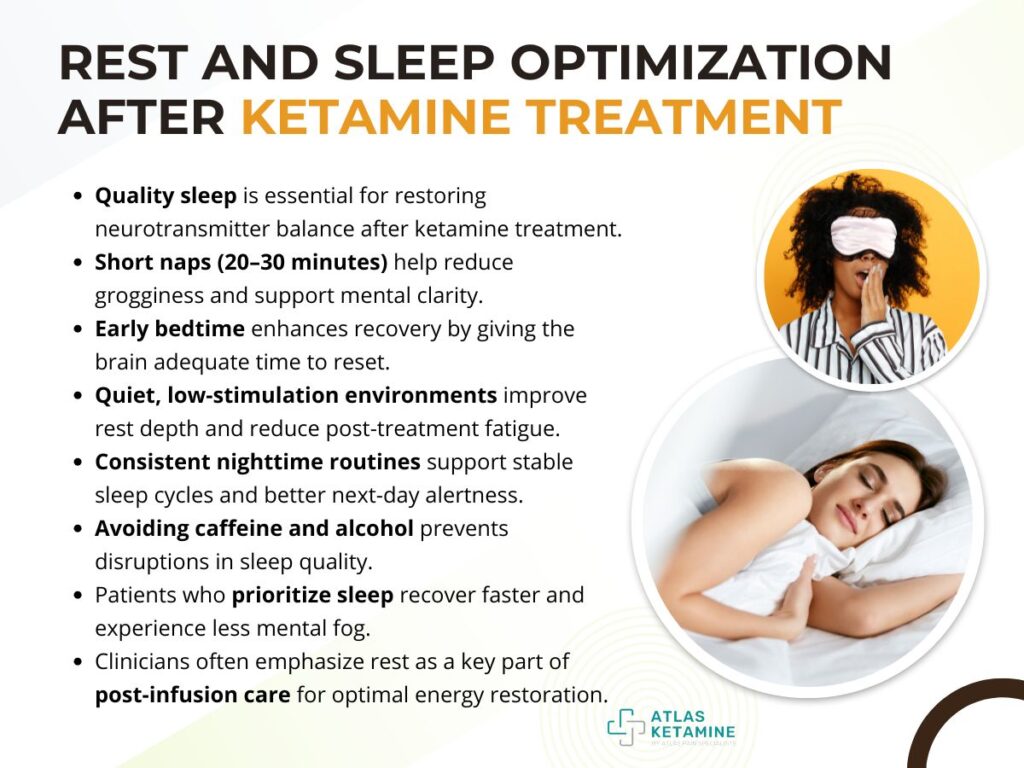
- Rest and Sleep Optimization
Restorative sleep enhances neurotransmitter regulation and overall energy levels. Patients regain mental clarity efficiently through short naps or early bedtime.
Quiet, low-stimulation environments allow deeper rest and faster recovery. Patients report improved focus and reduced grogginess after uninterrupted sleep cycles.
Clinicians recommend consistent sleep routines to strengthen recovery after ketamine treatment. Patients who follow these routines feel more alert and maintain energy longer.
- Light Physical Activity
Gentle walking or stretching improves circulation without overtaxing energy reserves. Moderate activity prevents stiffness and reduces fatigue while maintaining functional alertness.
Light physical activity releases endorphins, enhancing mood and energy naturally. Patients benefit from daylight exercise because it supports circadian rhythms and natural alertness.
Clinicians encourage patients to perform short, low-intensity exercises after treatment. Patients who pace movement during recovery experience smoother and faster energy restoration.
| Activity | Duration | Effect on Energy |
| Light walking | 15–20 min | Increases circulation and reduces overall fatigue |
| Gentle stretching | 10–15 min | Relieves tension and improves alertness |
| Short nap | 20–30 min | Restores mental clarity and supports recovery |
Monitoring and Professional Guidance
Clear instructions after treatment help patients manage fatigue effectively. Clinicians provide guidance on activity levels, symptom tracking, and safety consistently.
Patients determine their response and improve future sessions when they track energy patterns. Oversight ensures recovery aligns with overall therapeutic goals safely.
- Symptom Logging
Patients report fatigue, mood, and sleep quality to inform clinicians about treatment effects. Detailed logs allow providers to adjust therapy schedules proactively.
Clinicians analyze recorded data to identify trends and optimize future treatment sessions. Patients notice improved energy and reduced post-treatment fatigue when providers use this information.
Consistent symptom tracking supports personalized care plans. Patients who maintain accurate logs recover more efficiently and safely after ketamine infusion.
- Communication with Providers
Patients reduce next-day tiredness effectively when they communicate side effects clearly. Clinicians refine treatment plans, adjust dose, timing, and support therapies as necessary.
Frequent check-ins improve patient confidence and adherence. Providers offer guidance that maintains energy, safety, and treatment effectiveness consistently.
Open communication allows clinicians to identify problems before they worsen. Patients who discuss concerns promptly experience smoother recovery and fewer complications.
- Safety and Activity Restrictions
Patients resume daily responsibilities safely when they follow professional instructions carefully. Fatigue after ketamine infusion requires attention to prevent accidents.
Recovery periods allow patients to regain physical and cognitive function fully. Patients avoid high-risk activities until alertness and coordination return completely.
Clinicians provide clear recommendations on driving, operating machinery, or performing physically demanding tasks. Patients who follow these guidelines maintain safety and preserve energy efficiently.
How Soon Can You Drive After Ketamine Infusion?
Fatigue after ketamine infusion reduces alertness, slows reaction time, and impairs situational awareness in patients. They must assess energy and alertness carefully before driving or operating machinery.
Medical professionals recommend waiting until patients regain full cognitive clarity and physical steadiness. The safe timing depends on individual response, infusion dose, and session duration.
Patients prevent accidents and maintain safety when they follow recovery guidelines carefully. They resume driving and daily activities only after alertness and coordination return fully.