
Ketamine infusions can provide rapid relief from treatment-resistant depression, chronic pain, and PTSD symptoms. But how you care for yourself afterward plays a major role in how well your brain integrates the experience.
You should avoid driving, making major decisions, drinking alcohol, or jumping into stress too quickly after ketamine treatment. Recovery is part of the therapy and knowing what not to do can make all the difference.
Below are the key things on what not to do after ketamine infusion, along with practical tips to support a smoother recovery.
- Don’t Drive or Operate Machinery After Ketamine
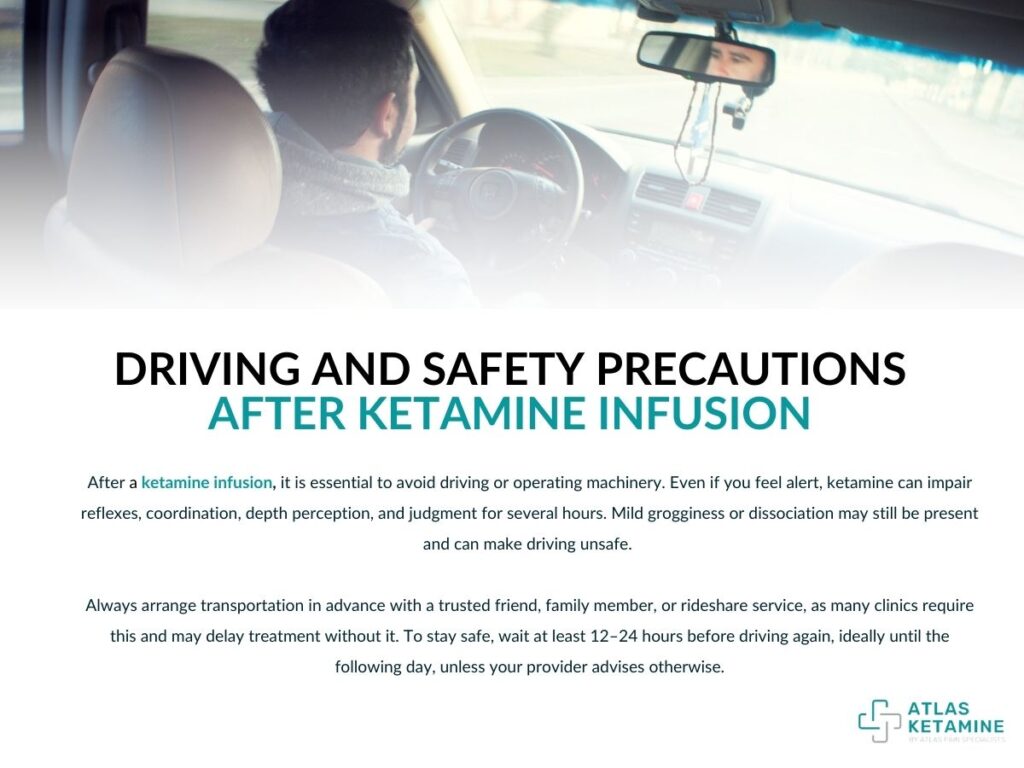
One of the most important precautions after ketamine infusion is to avoid driving yourself home or using any kind of machinery.
Even if you feel alert, your reflexes, depth perception, and coordination may still be impaired for several hours. Ketamine temporarily alters how your brain processes signals from your body and surroundings. Even mild dissociation or grogginess can make driving dangerous.
Always Arrange a Ride in Advance
Make sure you have a trusted friend, family member, or rideshare service ready to bring you home. Most clinics require this, some will even cancel or delay treatment if you arrive without transportation support.
Wait at Least 12–24 Hours to Resume Driving
Even if your infusion is early in the day, wait until the next morning to get behind the wheel. Your provider might adjust this based on how you tolerate treatment, but it’s better to wait than rush.
- Avoid Alcohol, Cannabis, and Sedatives
After your infusion, you might feel relaxed or emotionally open. But this is not the time to drink alcohol or use THC.
Combining ketamine with other substances can increase sedation, nausea, and interfere with your brain’s recovery process. Even substances you’re used to may affect you differently after ketamine.
Why You Should Wait
Your brain is undergoing rapid changes in neurotransmitter activity and connectivity especially in areas related to mood regulation. Alcohol and cannabis could dull or confuse those signals, reduce ketamine’s benefits, or cause you to feel unwell.
Stick to Hydration and Light Food
Water, herbal tea, or electrolyte drinks are ideal. Keeping your body hydrated helps flush out residual medication and supports better sleep later that night.

- Don’t Make Big Life Decisions Right Away
Ketamine often produces emotional insights and shifts in perception. While these can feel powerful, it’s best not to act on them immediately.
Post-infusion “clarity” is common, but your thinking is still recalibrating. Whether you feel energized, euphoric, or deeply introspective, give yourself time before making decisions about relationships, jobs, or finances.
Use This Window for Reflection, Not Action
Write down thoughts or realizations that come up, but wait 24 to 48 hours before turning them into action plans. Discussing these reflections with a therapist can help process them constructively.
Insight Isn’t the Same as Readiness
Feeling inspired is valuable, but lasting decisions require grounded thinking. Let the emotional wave settle before committing to big moves.
- Don’t Overexert Yourself or Skip Rest
You may feel physically okay, but that doesn’t mean your body and brain are ready to jump into full activity.
Skipping rest or pushing through fatigue after a ketamine infusion can prolong side effects and reduce the positive impact.
Recovery Helps Integration
The time right after treatment is when your brain is “reconnecting” new pathways. Overstimulating your system through intense work, workouts, or stress can disrupt that.
What to Do Instead
Try walking, journaling, gentle yoga, or resting in a quiet space. Some people benefit from meditation or listening to calm music. Avoid screen time if you feel overstimulated.

- Don’t Isolate Yourself Completely
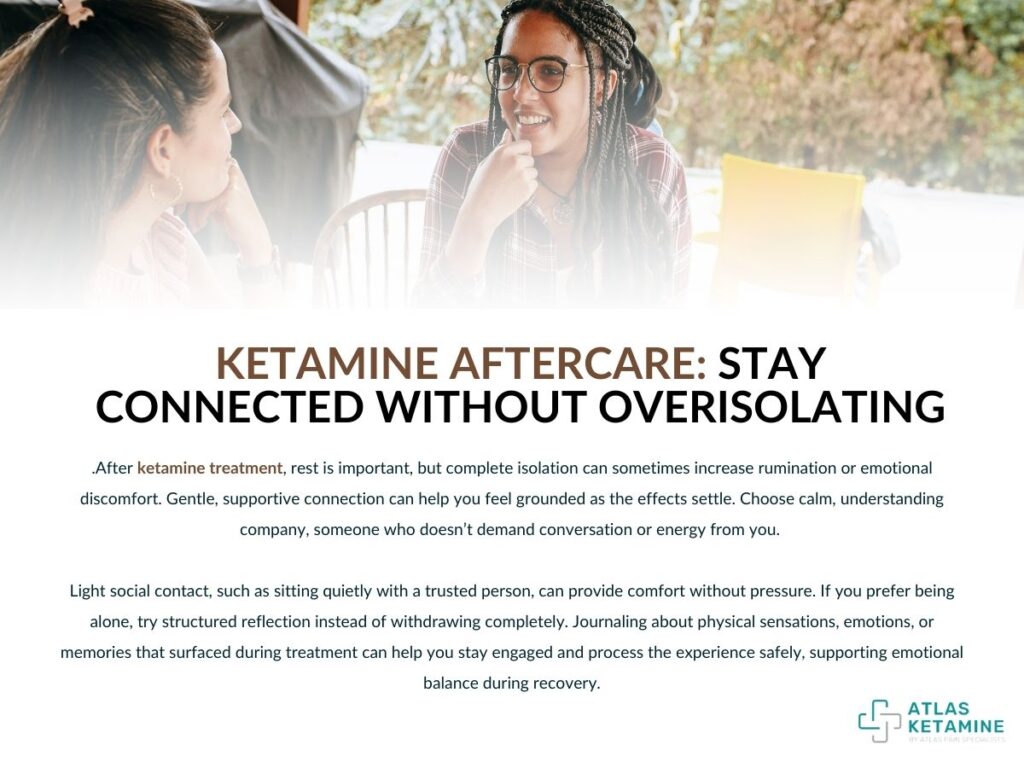
While it’s important to rest, that doesn’t mean cutting yourself off from everyone. Completely isolating after ketamine can lead to rumination or emotional discomfort.
Choose your company carefully, a supportive, non-demanding presence is best.
Light Social Contact Can Be Helpful
Spending time with someone who understands your journey can provide grounding and comfort. You don’t have to explain everything just having someone there can ease the transition back to baseline.
Prefer to Be Alone? Try Structured Reflection
If you don’t feel like talking, try journaling about how your body feels, what emotions are coming up, or what memories surfaced. This helps you stay engaged without becoming overwhelmed.
- Avoid Skipping Meals or Overeating
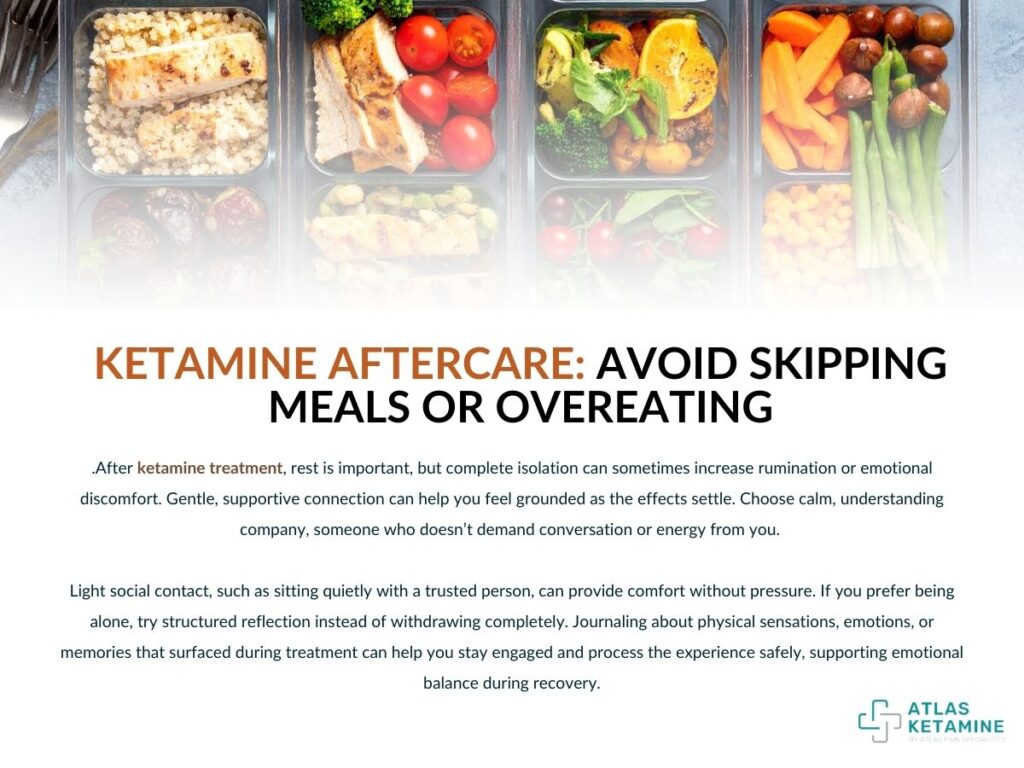
Appetite changes are normal after ketamine. Some people feel queasy or avoid food, while others crave large meals. Both extremes can make you feel worse.
Light, balanced meals support your energy and reduce nausea or dizziness.
Best Foods for Recovery
Stick with simple, easy-to-digest options: soup, crackers, yogurt, rice, or eggs. Avoid greasy, spicy, or super sweet foods until you know how your stomach feels.
When to Eat
Try to eat within 2–3 hours of your infusion, even if it’s something small. Staying nourished supports stable mood and hydration.
- Don’t Ignore Unusual Symptoms
Mild side effects like sleepiness or emotional waves are expected. But some symptoms may need medical attention.
If something feels “off” and doesn’t improve in a few hours, don’t wait to call your provider.
What’s Normal vs. What Needs a Call
| Symptom | Category |
| Mild dizziness or nausea | Common |
| Light emotional shifts | Common |
| Fatigue or sleepiness | Common |
| Severe vomiting | Call Your Provider |
| Intense paranoia or fear | Call Your Provider |
| Hallucinations after leaving clinic | Call Your Provider |
| Chest pain or shortness of breath | Call Your Provider |
Always use the emergency number your clinic provides if anything concerns you.
- Don’t Return to Work or Stress Right Away
Feeling mentally “okay” isn’t the same as being ready for work. Even emails and small tasks can feel overwhelming after ketamine, especially if your brain is still integrating the session.
Jumping into stress can reduce benefits and increase fatigue.
Take the Day Off
Block your schedule completely for at least one day post-infusion. Don’t book meetings, errands, or social plans that might become too much.
Ease In the Next Day
If you return to work the following day, start light. Avoid multitasking, difficult conversations, or tight deadlines. Some people benefit from working remotely during this time.

What to Expect Emotionally After a Ketamine Infusion
Emotional effects after ketamine are just as important to monitor as physical ones. You might feel reflective, uplifted, foggy, or even tearful all within the same day. These experiences are part of how the brain rewires itself.
Emotional Sensitivity Is Normal
It’s common to feel more sensitive or open to emotion after a session. Some patients feel joy or relief; others experience sadness, grief, or past memories. This is not a setback, it's part of the therapeutic effect.
Common Emotional Shifts You Might Notice:
- Heightened empathy or awareness of others’ feelings
- Memories surfacing from earlier life experiences
- A sense of peace or detachment from previous distress
- Feelings of being emotionally raw or “spaced out”
All of these are temporary. Having a therapist or support person available to debrief can help make sense of these feelings as they unfold.
Don’t Compare Your Experience to Others
Ketamine journeys are deeply individual. What works for one person may feel totally different for another.
Avoid looking to forums or friends to define how your recovery “should” go. Your brain, body, and history are unique.
Focus on Your Own Pattern
Some people feel better after one infusion. Others need several to notice change. What matters is tracking your own patterns and progress over time not matching someone else’s timeline.
Keep Notes
Consider jotting down how you feel each day after treatment: mood, sleep, energy, appetite. These notes help both you and your provider measure progress and adjust future sessions if needed.
Ketamine Infusions vs. Oral Medication
Understanding how ketamine compares to daily antidepressants helps clarify why aftercare is so specific. Infusions act faster, work differently in the brain, and require in-person medical oversight.
| Aspect | Ketamine Infusion | Oral Antidepressants |
| Onset of Effects | Often within hours | Typically 2 to 6 weeks |
| How It's Given | IV or IM in a clinic setting | Pills taken daily at home |
| Mechanism of Action | NMDA receptor modulation | Usually serotonin/norepinephrine pathways |
| Monitoring Required | Yes – clinical supervision | Minimal, periodic check-ins |
| Side Effects | Short-term dissociation, nausea | Weight gain, sexual side effects, emotional flattening |
| Use Case | Often for treatment-resistant depression | First-line or general depression treatment |
Both can be effective, depending on your condition and history. Some people use them together under medical guidance. The key is not choosing one over the other too early, it's finding the right combination for long-term support.
Final Thoughts: Ketamine Infusions vs. Oral Medication
Knowing what not to do after a ketamine infusion is just as important as the treatment itself. Rest, hydration, low stress, and good support create the right environment for healing. Every action you take after the infusion, especially in the first 24 hours, can influence how long the benefits last.
If you’re weighing ketamine infusions vs. oral medication, speak with your provider about which fits your health goals and lifestyle. The right answer may not be either-or it may be both, carefully balanced. Our next guide will explore how these options can work together for long-term relief.