
Ketamine is administered through several medical routes including intravenous (IV) infusion, intramuscular (IM) injection, nasal spray, oral tablets, and sublingual lozenges depending on the patient’s needs and the condition being treated. Each method delivers the medication into the body in a different way, which affects how quickly it works, how strong the effects are, and how long they last.
In this article, you’ll learn how Is ketamine administered, what patients typically experience, how doctors decide which option to use, what to expect during a ketamine treatment session, and why proper medical supervision is essential for safe and effective ketamine treatment.
What Is Ketamine?
Ketamine is a dissociative anesthetic, meaning it temporarily alters perception, pain sensation, and levels of awareness. By affecting specific receptors in the brain, it can create a sense of separation from physical pain and the surrounding environment, which is why it has been widely used in medical settings for many years. In hospitals, ketamine has a strong safety record and is commonly used for:
- Surgical anesthesia
- Pain control
- Emergency sedation
In more recent years, low-dose ketamine has gained attention for its potential mental health benefits when used under strict medical supervision. It is now carefully prescribed in certain settings to help manage conditions such as:
- Treatment-resistant depression
- Severe anxiety
- Post-traumatic stress disorder (PTSD)
Because ketamine can significantly affect the brain and body, it should only be administered by a qualified healthcare professional or through an approved and monitored prescription program.
Why the Method of Administration Matters
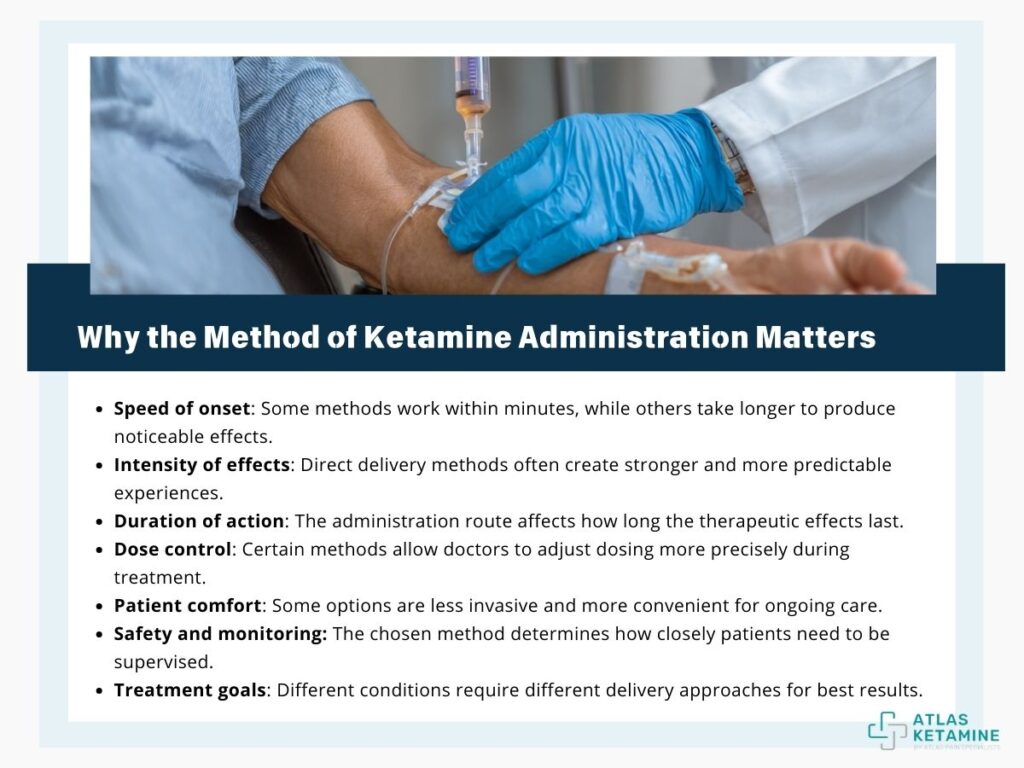
The way ketamine is given plays a major role in how it works in the body. Different delivery methods affect how quickly it starts working, how strong the effects are, and how long those effects last.
1. How quickly it starts working
Some methods, like IV infusions, deliver ketamine directly into the bloodstream, producing effects within minutes. Others, such as oral tablets, take longer because the medication must pass through the digestive system.
2. How strong the effects are
Direct delivery methods typically create stronger and more predictable effects. Slower absorption routes often produce milder, more gradual results.
3. How long the effects last
Faster-acting methods may wear off more quickly, while slower methods can provide longer-lasting effects. This timing can influence how a treatment session is planned and monitored.
4. How easy it is to control the dose
Methods like IV infusions allow doctors to adjust dosing in real time for greater precision. Other forms, such as oral or lozenges, are less exact but more convenient.
Choosing the right administration method helps ensure ketamine is both effective and safe. It allows healthcare providers to tailor treatment to each patient’s needs while minimizing risks.
The Main Ways Ketamine Is Administered
Ketamine can be delivered to the body in several medically approved ways, each designed to meet different treatment goals. These methods vary in how quickly they work, how strong their effects are, and how closely the dose can be controlled.
1. Intravenous (IV) Infusion
Ketamine is delivered directly into a vein through a small IV line, allowing it to enter the bloodstream immediately. This method provides fast, predictable effects and lets doctors precisely control the dosage. It is commonly used in hospitals and ketamine infusion clinics for mental health and pain treatment.
2. Intramuscular (IM) Injection
Ketamine is injected into a muscle, such as the arm or thigh, where it is absorbed into the bloodstream. It works quickly and produces strong effects, though not as instantly as IV delivery. This method is often used in emergency settings or when IV access is not available.
3. Nasal Spray (Esketamine)
Esketamine is a prescription nasal spray absorbed through the lining of the nose. It is FDA-approved for treatment-resistant depression and must be used in a certified clinic under supervision. Patients remain on-site after dosing so healthcare providers can monitor for side effects.
4. Oral Ketamine (Tablets or Liquid)
Oral ketamine is swallowed and absorbed through the digestive system. This method takes longer to work and produces milder effects compared to IV or injections. It is sometimes used in carefully managed at-home or clinical treatment programs.
5. Sublingual or Lozenges
These are small tablets that dissolve under the tongue or in the cheek, allowing ketamine to be absorbed through the tissues of the mouth. This provides faster and more consistent absorption than swallowing a pill. It is commonly used in certain mental health treatment plans.
Each method of ketamine administration serves a specific purpose, from rapid emergency care to carefully guided mental health therapy. The best option is chosen by a healthcare provider based on the patient’s needs, safety, and treatment goals.
Comparison Summary
Below is a simple side-by-side look at the main ketamine administration methods to help clarify how they differ in speed, strength, and typical medical use.
| Method | How It’s Given | Onset Time | Strength & Control | Common Uses |
| IV Infusion | Delivered directly into a vein | 1–5 minutes | Very strong and highly precise | Depression therapy, chronic pain, surgery |
| IM Injection | Injected into a muscle | 5–10 minutes | Strong, less adjustable than IV | Emergency sedation, pain control |
| Nasal Spray (Esketamine) | Sprayed into the nose | 20–40 minutes | Moderate and consistent | Treatment-resistant depression |
| Oral (Tablet/Liquid) | Swallowed | 30–60 minutes | Mild to moderate, less predictable | At-home therapy, pain management |
| Sublingual/Lozenge | Dissolved under the tongue or cheek | 15–30 minutes | Moderate, more consistent than oral | Mental health treatment programs |
Faster methods like IV and IM provide stronger and more immediate effects, making them ideal for medical and clinical settings. Slower options like nasal, oral, and sublingual forms are often used for structured mental health care, offering convenience and longer-lasting, gentler effects.
Which Method Is Best?
There is no single ketamine method that works best for everyone. The ideal option depends on the medical condition being treated, how quickly relief is needed, and how closely the patient must be monitored.
1. Emergency Care
IV or IM ketamine is usually preferred because it works very quickly. These methods allow doctors to stabilize patients and control pain or agitation right away. They are commonly used in hospitals and emergency rooms.
2. Depression and Mental Health Treatment
IV infusions and nasal spray are often used because they provide reliable and controlled dosing. These methods allow clinicians to closely monitor both physical and psychological effects. They are especially helpful for treatment-resistant depression.
3. Chronic Pain Management
IV infusions or oral ketamine may be used depending on the severity of pain and treatment plan. IV therapy offers stronger relief, while oral forms may be used for ongoing management. Doctors adjust the method based on patient response.
4. At-Home or Long-Term Therapy
Oral tablets or sublingual lozenges are commonly used because they are easier to administer. They provide gentler effects and can be taken as part of a supervised treatment plan. Regular check-ins with a provider are still required.
The best ketamine method is the one that safely matches a patient’s condition, lifestyle, and treatment goals. A healthcare provider will determine the most effective and appropriate option based on individual needs.
What to Expect During a Ketamine Treatment Session
A ketamine treatment session is designed to be safe, comfortable, and closely monitored. Knowing what typically happens can help patients feel more at ease and prepared for the experience.
1. Preparation
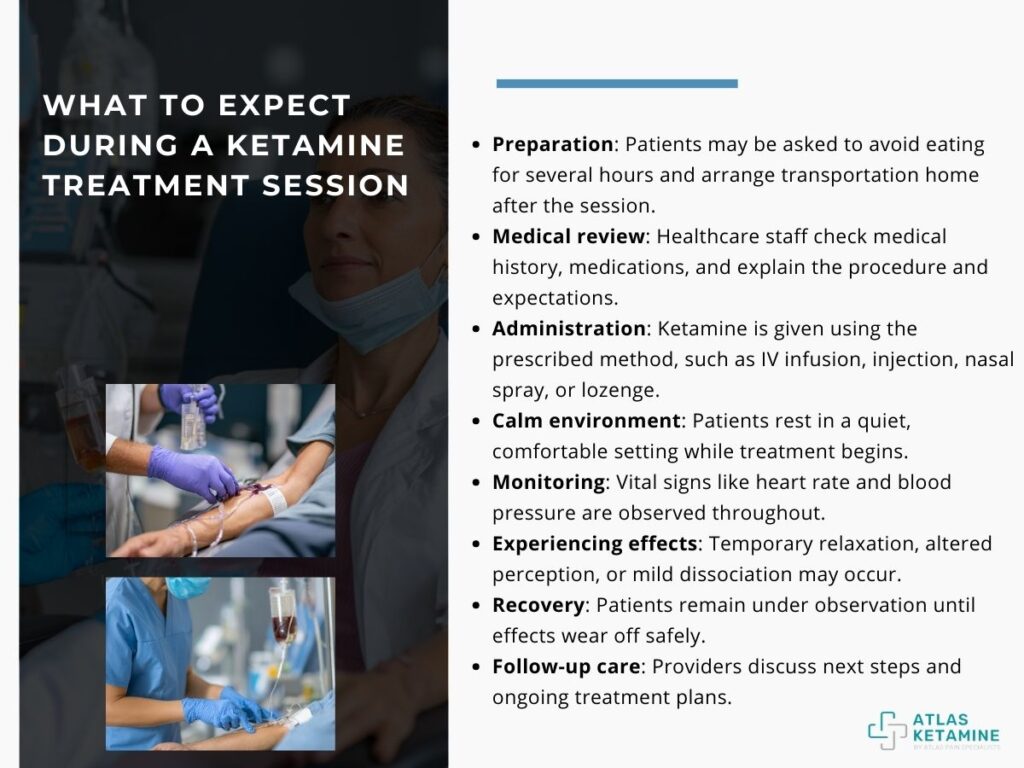
Before the session, patients may be asked to avoid food or drink for a few hours and arrange transportation home. Medical staff review health history and explain the procedure to ensure safety. This preparation helps minimize risks and set expectations.
2. Administration
Ketamine is given using the method prescribed by the healthcare provider, such as IV, IM, nasal spray, oral tablets, or lozenges. Patients usually sit or lie in a calm, supportive environment while the medication takes effect. Staff monitor vital signs and overall wellbeing throughout the session.
3. Experiencing Effects
During treatment, patients may notice changes in perception, body sensation, or mood. Some experience mild dissociation or relaxation, which is temporary and normal. Medical professionals are present to manage any side effects and provide reassurance.
4. Recovery and Integration
After the session, patients rest until the effects wear off and vital signs are stable. Many clinics include time to discuss the experience and reflect on any insights gained. Follow-up care may involve planning future sessions or integrating the experience into ongoing therapy.
A ketamine treatment session is structured to maximize safety, comfort, and therapeutic benefit. By understanding the process, patients can approach therapy with confidence and fully engage in their treatment.
Safety and Medical Supervision
Ketamine is a powerful medication that affects both the brain and body, so it must always be used responsibly. Proper medical supervision helps ensure that treatment is safe, effective, and tailored to each individual.
1. Professional Monitoring
Healthcare providers monitor vital signs such as heart rate and blood pressure during treatment. This helps quickly identify and manage any unexpected reactions.
2. Accurate Dosing
Medical supervision ensures the correct dose is given based on the patient’s condition and health history. This reduces the risk of side effects and improves treatment outcomes.
3. Managing Side Effects
Ketamine can cause dizziness, nausea, or dissociation, especially at higher doses. Trained professionals know how to address these effects and keep patients comfortable.
4. Preventing Misuse
Supervised treatment reduces the risk of dependency or improper use. Clinics and prescription programs follow strict guidelines to protect patient safety.
With the right medical oversight, ketamine can be a safe and effective treatment option. Supervision ensures patients receive the benefits of therapy while minimizing potential risks.
Final Thoughts
Ketamine is a powerful and versatile medication, used for everything from surgical anesthesia to mental health therapy. The method of administration IV, injection, nasal spray, oral, or sublingual determines how quickly it works, how strong the effects are, and how long they last. Healthcare providers carefully select the approach that best fits each patient’s condition and treatment goals.
When administered under proper medical supervision, ketamine can be a safe and effective option for managing pain, depression, anxiety, and other conditions. Understanding the methods, session experience, and safety measures helps patients feel informed and confident throughout their treatment.