
Ketamine therapy has gained widespread attention in recent years as a promising treatment for depression, PTSD, and chronic pain. But as interest grows, many patients and families are left asking: how old do you have to be for ketamine therapy?
While there is no single national law that outlines a strict age requirement, the answer often depends on the form of ketamine used, the patient's medical history, and clinic-specific policies. In most cases, providers require patients to be at least 18 years old, but there are exceptions under close medical supervision.
Understanding the context around these age limits helps patients and families make more informed decisions when considering this type of care.
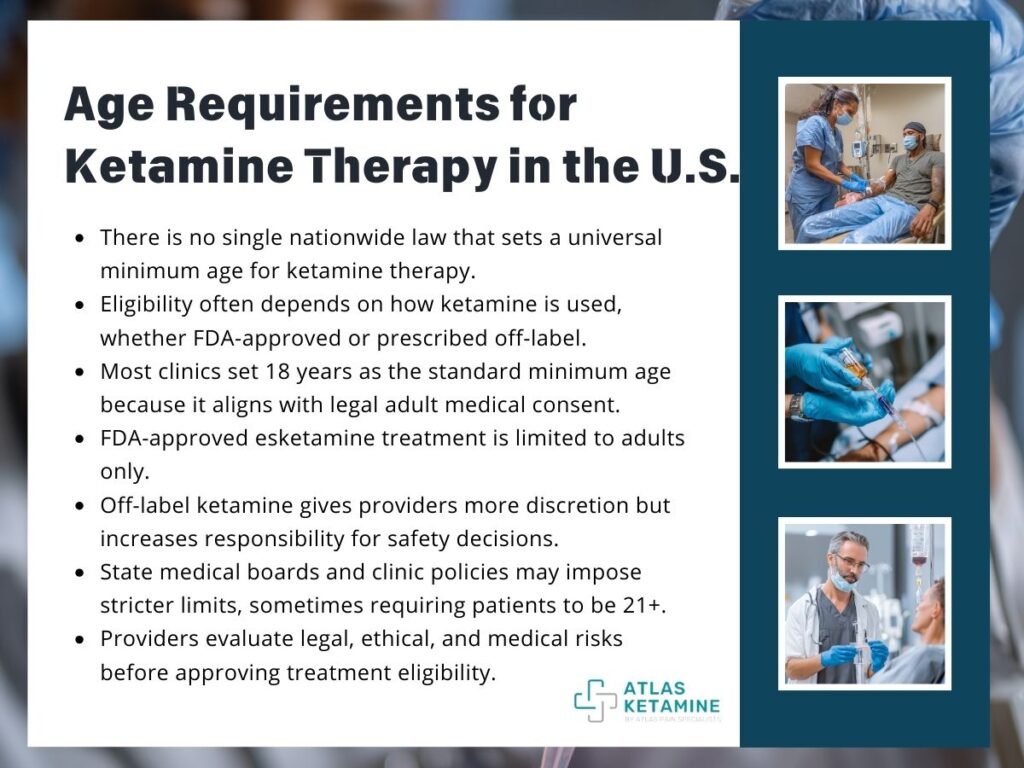
Age Requirements for Ketamine Therapy in the U.S.
There is no universal legal age that applies to all forms of ketamine therapy across the United States. Instead, age requirements are guided by how the drug is being used whether it's FDA-approved or used off-label as well as clinic-specific rules and state-level medical guidelines.
This patchwork of regulations means that eligibility often hinges on how and why the treatment is being administered. Some clinics are more cautious than others, and professional judgment plays a significant role.
FDA-Approved Uses and Minimum Age
In 2019, the U.S. Food and Drug Administration (FDA) approved ketamine, a nasal spray branded as Spravato, for adults with treatment-resistant depression. This approval applies only to adults aged 18 and older, and it is administered in certified medical settings under strict guidelines.
The controlled environment and federal backing make this the most regulated form of ketamine therapy currently available in the U.S. Patients must also be enrolled in a Risk Evaluation and Mitigation Strategy (REMS) program, which ensures safety and monitoring.
Differences Between Ketamine and Esketamine Regulations
While esketamine has FDA approval, racemic ketamine (the version often used intravenously or intramuscularly in clinics) is typically prescribed off-label. That means its use falls outside the specific guidelines set by the FDA, giving clinics more discretion when deciding who qualifies for treatment.
This flexibility can be a double-edged sword: it allows for individualized care but also places a heavier burden on providers to assess safety. Clinics must navigate ethical considerations and best practices in the absence of standardized protocols.
Why 18 Is the Default Minimum Age
In most U.S. states, individuals are considered legal adults at age 18, which means they can consent to medical treatments. Clinics often adopt this as the baseline for eligibility to avoid legal complications and ensure informed consent.
The age of majority is a critical legal boundary across most healthcare settings, and ketamine therapy is no exception. Even with parental approval, many providers will hesitate to treat anyone under 18 unless there's compelling medical justification.
Are There Federal or State Laws on Minimum Age?
There are no federal laws that set a minimum age for off-label ketamine use. However, state medical boards and individual clinic policies frequently enforce age cutoffs based on liability concerns and ethical standards.
Some clinics may raise the minimum age to 21 or limit treatment to patients who have a documented history of treatment-resistant depression. These internal policies aim to protect both the patient and the provider in the absence of universal guidelines.
When Ketamine Therapy Is Considered for Minors
Although most clinics limit treatment to adults, there are rare cases where ketamine therapy is considered for patients under 18. These cases typically involve severe psychiatric conditions where other treatments have failed.
Providers must weigh the potential benefits against the limited research available for pediatric use.
Off-Label Pediatric Use in Severe Depression or PTSD
In life-threatening situations, such as suicidal ideation or severe PTSD, some psychiatrists may recommend ketamine as a last-resort intervention for minors. These cases are almost always handled in a hospital or clinical research setting.
The decision is never taken lightly and usually follows months or years of unsuccessful treatment with other medications or therapies. Some early research trials have included adolescents, but results are still emerging and far from definitive.
Role of Parental Consent and Guardian Involvement
For minors to receive ketamine therapy, full consent from a legal guardian is mandatory. Clinics must also ensure that both the patient and their guardian understand the treatment plan, risks, and expectations.
In many cases, the consent process is more intensive than for adults and may include informational sessions, written agreements, and multiple evaluations. Clear communication is vital to maintain trust and ensure that families are fully informed.
Clinical Oversight and Multidisciplinary Review
Treating minors often involves a team of specialists. Psychiatrists, pediatricians, and occasionally ethics boards review each case individually.
This ensures a high standard of care and provides a safety net for both the patient and the provider. Collaboration among medical professionals helps assess whether the potential benefit outweighs the risks in particularly complex cases.
What Criteria Must Be Met for a Minor to Qualify
These requirements help ensure that ketamine therapy is only pursued when truly necessary. The layers of oversight are designed to protect minors from experimental or poorly understood interventions.
- Diagnosed with a severe, treatment-resistant condition
- Failed to respond to at least two conventional therapies
- Cleared by a psychiatric evaluation
- Supported by parental or guardian consent
- Treated under close clinical supervision
What Factors Matter More Than Age Alone
Age is only one part of the picture when determining eligibility for ketamine therapy. Providers also assess each patient’s overall health, treatment history, and mental readiness.
These individualized assessments are critical for responsible administration.
Mental Health History and Treatment Resistance
Patients are typically considered for ketamine therapy only after failing to respond to multiple first-line treatments like SSRIs, therapy, or other psychiatric medications. Documented history of treatment resistance is one of the strongest eligibility factors.
Providers look for patterns of long-term struggle with depression, anxiety, or PTSD to determine if ketamine may offer a viable alternative.
Medical Screenings to Rule Out Risk Factors
Prior to starting treatment, patients undergo a thorough medical screening. Conditions such as uncontrolled high blood pressure, certain neurological disorders, or a history of substance abuse may disqualify a patient or require special precautions.
Clinics may request recent labs, EKGs, or physician clearance depending on the individual’s profile. Safety remains the top priority.
Cognitive Development and Brain Maturity Considerations
Younger patients may respond differently to ketamine due to their ongoing brain development. Since ketamine acts on the brain’s glutamate system and can influence neuroplasticity, there are concerns about how it may affect adolescents long-term.
Research in this area is still limited. Providers often err on the side of caution when considering treatment for patients whose cognitive development is not yet complete.
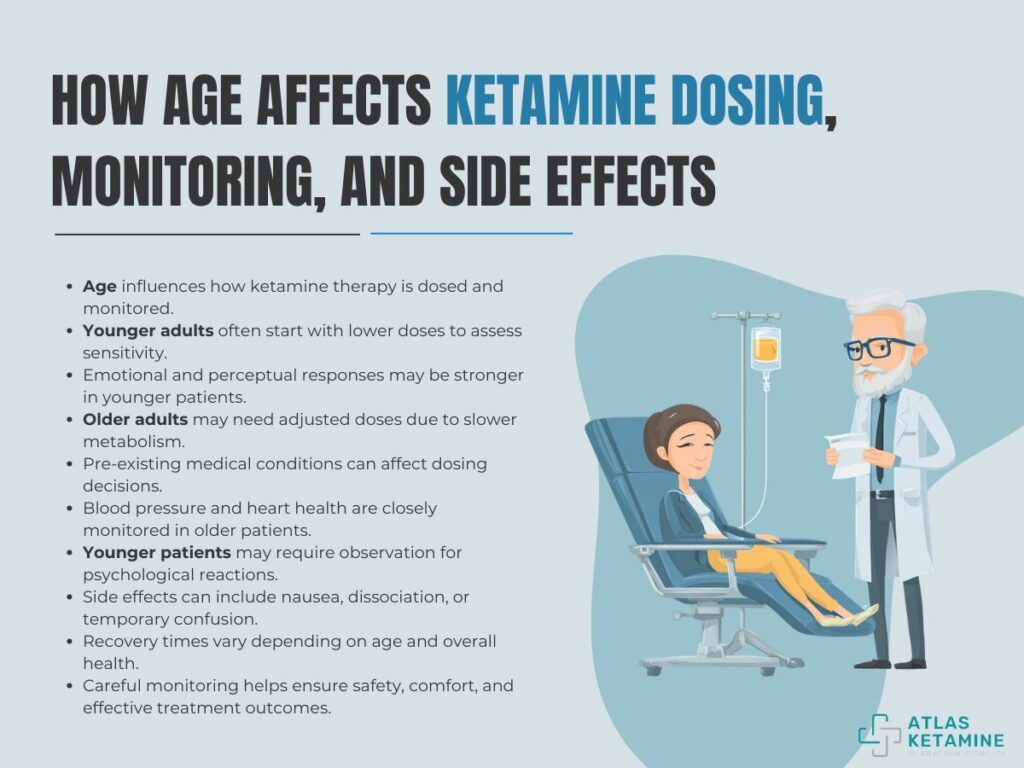
How Age Affects Dosing, Monitoring, and Side Effects
Ketamine therapy is not one-size-fits-all. A patient’s age can influence how the medication is dosed, monitored, and how side effects present themselves.
Treatment plans are tailored to minimize risk and maximize efficacy.
Dosing Protocols by Age Group
Younger patients may receive lower initial doses to minimize risks, particularly when administered via IV or IM routes. Older adults might also require dose adjustments due to slower metabolism or concurrent medications.
Dosage may also depend on body weight, overall health, and previous response to anesthesia or dissociative medications.
Side Effect Profiles in Younger vs. Older Patients
Common side effects like dissociation, elevated blood pressure, and nausea may vary in intensity depending on the patient’s age. Younger adults might experience more emotional fluctuations, while older adults could face cardiovascular concerns.
Other possible side effects include headaches, blurred vision, or disorientation, and each age group experiences these to different degrees.
Recovery and Observation Time Differences
Clinics may monitor younger adults longer after a session to observe for psychological reactions. Older patients may need additional time due to potential sedation or slower physiological recovery.
Post-session care may also differ: hydration, relaxation space, or follow-up protocols may be adapted based on age-specific needs.
Cognitive and Emotional Response Variability
Since ketamine can temporarily alter mood and perception, emotional responses may differ based on age and developmental stage. Providers watch closely for signs of heightened anxiety or confusion, especially in first-time patients.
Over time, clinicians may adjust protocols to improve emotional stability and comfort before, during, and after sessions.
Table: Age-Based Considerations in Ketamine Therapy
| Factor | Young Adults (18–25) | Older Adults (60+) |
| Typical Dose Adjustment | Based on lower body mass | Based on slower metabolism |
| Side Effect Sensitivity | Emotional volatility more common | Cardiovascular concerns higher |
| Recovery Time | Often shorter | May require extended monitoring |
| Neuroplastic Response | High neuroplasticity | May benefit from slower titration |
How Old Do You Have to Be for Ketamine Therapy Moving Forward
As ketamine therapy becomes more mainstream, new clinical research may reshape how age is factored into eligibility. While 18 remains the standard threshold for most providers today, future studies could lead to broader use in younger populations under structured guidelines.
Expanded clinical trials may shed light on long-term impacts and safe usage in adolescents. For those considering this treatment, understanding age requirements is just one piece of the puzzle.
The next step is exploring how insurance coverage, provider qualifications, and treatment setting influence access and outcomes in ketamine therapy. Families and patients alike will benefit from a deeper understanding of the care landscape as it continues to evolve.