
Exercise after ketamine treatment can support recovery, improve mood, and help maintain long-term mental and physical health, but timing and intensity matter more than many people realize. Whether ketamine was used for depression, chronic pain, PTSD, anxiety, or another medical condition, the body and brain often need time to stabilize before returning to intense physical activity.
Some people feel energized after treatment, while others experience fatigue, dizziness, nausea, or temporary dissociation that can make exercise unsafe too soon afterward. Because ketamine affects the nervous system, balance, blood pressure, coordination, and mental processing, jumping back into strenuous workouts immediately after treatment may increase the risk of injury or delayed recovery.
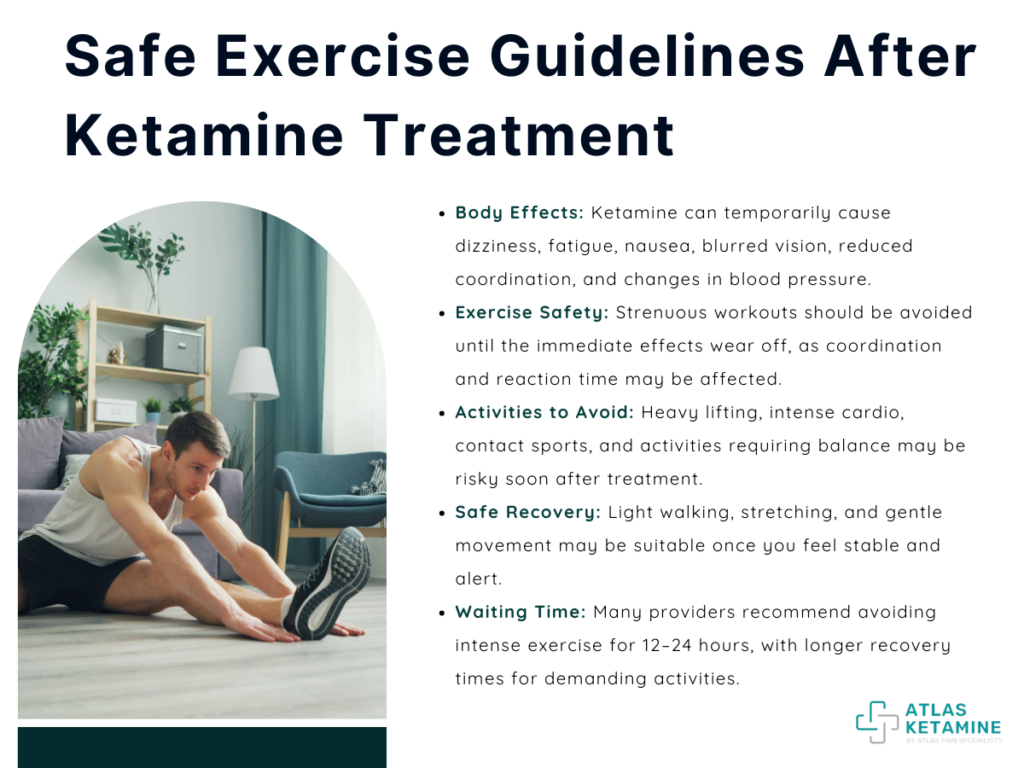
On the other hand, avoiding movement completely for too long may reduce some of the emotional and physical benefits that gentle activity can provide. The key is understanding how ketamine affects the body, when exercise becomes safe again, and what types of movement are most helpful during recovery.
This guide explains what to expect physically after ketamine therapy, how soon you can exercise safely, which workouts are best, and the warning signs that indicate you should slow down.
How Ketamine Affects the Body After Treatment
Understanding how ketamine affects the nervous system helps explain why exercise after ketamine should be approached carefully. Ketamine works differently from many traditional medications because it acts on glutamate pathways in the brain rather than serotonin alone.
This can rapidly alter mood, perception, and neurological activity.
Common Physical Side Effects
After treatment, some patients experience temporary physical and mental effects such as:
- Dizziness or lightheadedness
- Blurred vision
- Reduced coordination
- Increased fatigue
- Nausea
- Elevated blood pressure
- Dissociation or feeling mentally detached
These effects are usually temporary, but they can interfere with physical performance and reaction time. Even when someone feels emotionally better after treatment, the body may still be recovering neurologically.
How Ketamine Affects Physical Recovery
Ketamine can also temporarily affect hydration levels, heart rate, and balance. These changes are particularly important for people who participate in heavy lifting, endurance training, high-intensity interval workouts, or activities requiring coordination.
The way ketamine is administered matters too. IV ketamine infusions often produce stronger immediate aftereffects compared to lower-dose lozenges or nasal spray treatments. Dosage, treatment frequency, and individual sensitivity all influence recovery time.
Is Exercise Safe After Ketamine?
Exercise after ketamine is generally safe once the immediate effects wear off, but strenuous activity too soon may increase physical risk. Most providers recommend avoiding intense exercise on the same day as treatment, especially immediately afterward.
Why Intense Exercise Can Be Risky
Ketamine can temporarily impair coordination and reaction time. Activities requiring balance, quick movements, or heavy resistance training may become unsafe until the nervous system fully stabilizes.
Blood pressure fluctuations are another concern. Ketamine sometimes raises blood pressure temporarily, and combining this with intense exercise may place extra strain on the cardiovascular system.
Activities That Require Extra Caution
Safety concerns are highest with activities such as:
- Heavy weightlifting
- Running long distances
- Cycling outdoors
- High-intensity interval training
- Contact sports
- Swimming alone
Gentle movement, however, is often encouraged once the patient feels stable and alert again. Light walking, stretching, or mobility work may support recovery by improving circulation and reducing stiffness after treatment.
The Importance of Gradual Progression
The safest approach is gradual progression rather than immediately returning to maximum physical intensity. Some people feel emotionally uplifted after ketamine and assume they are physically ready for demanding exercise immediately.
Emotional improvement does not always mean the nervous system has fully recovered yet.
How Long Should You Wait Before Exercising?
The safest timeline for exercise after ketamine depends on the type of treatment, dosage, and how your body responds afterward. There is no universal recovery window because individual reactions vary significantly.
General Recovery Guidelines
Most clinics recommend avoiding strenuous exercise for at least 12 to 24 hours after ketamine treatment. Some patients feel normal again within a few hours, while others experience lingering fatigue or dizziness into the next day.
A general guideline looks like this:
| Type of Activity | Suggested Waiting Period |
| Gentle walking | Several hours if fully alert |
| Stretching or yoga | Same day or next day if stable |
| Moderate workouts | 24 hours |
| Heavy lifting or intense cardio | 24–48 hours |
| Competitive sports | After full recovery if needed |
Why Individual Recovery Matters
Patients receiving ketamine for chronic pain or severe depression may also have underlying fatigue or physical limitations that influence exercise tolerance independently of the medication itself.
Listening to the body matters more than following rigid timelines. If dizziness, nausea, blurred vision, or mental fog remain present, delaying exercise is usually the safer decision.
Best Types of Exercise After Ketamine
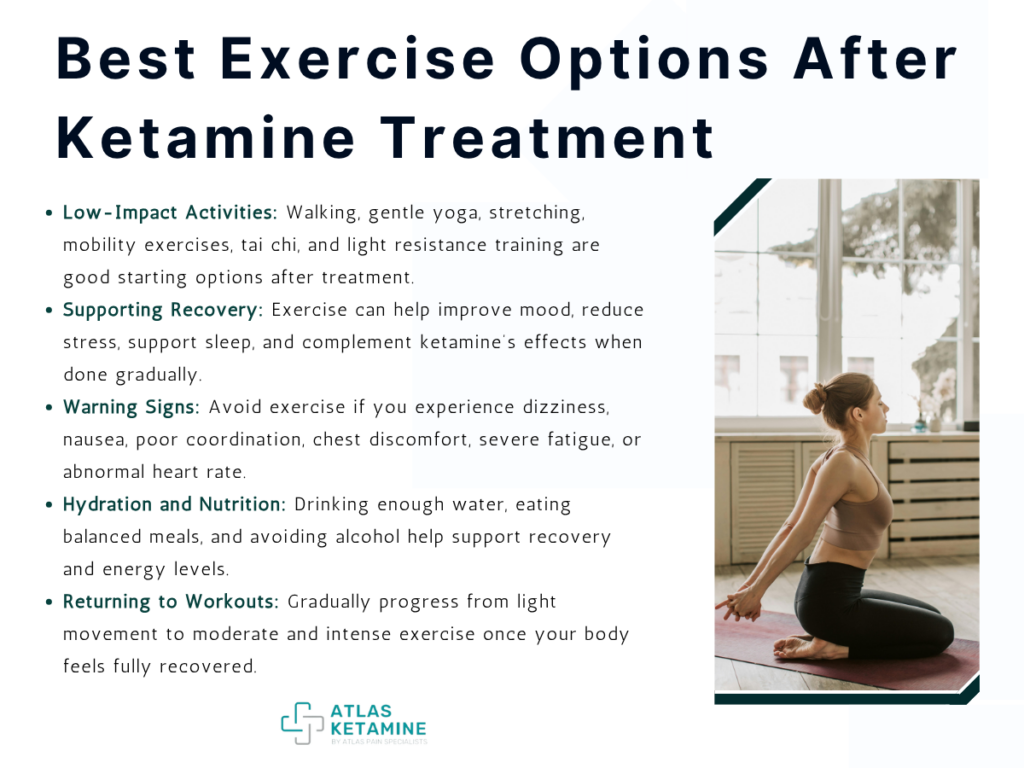
Low-impact movement is usually the best starting point for exercise after ketamine because it supports recovery without overstressing the nervous system. Gentle exercise may help stabilize mood, reduce anxiety, and improve overall well-being after treatment.
Walking and Gentle Cardio
Walking is often one of the safest and most effective options initially. It improves circulation, encourages light movement, and helps regulate stress hormones without placing excessive demands on coordination or cardiovascular function.
Low-Impact Recovery Exercises
Other beneficial low-impact activities may include:
- Gentle yoga
- Stretching routines
- Mobility exercises
- Easy cycling indoors
- Tai chi
- Light resistance band training
These forms of movement help reconnect the body and mind gradually, which can feel particularly helpful after dissociative ketamine experiences.
Returning to Moderate Exercise
Yoga and stretching may also reduce muscle tension and improve nervous system regulation, especially for patients receiving ketamine for anxiety, PTSD, or chronic pain. Moderate exercise can usually resume later once balance, hydration, and energy levels normalize completely.
Exercise After Ketamine for Mental Health Recovery
Exercise after ketamine may complement mental health improvements by supporting mood regulation, sleep quality, and stress reduction. Many patients receive ketamine therapy for depression, anxiety, PTSD, or treatment-resistant mood disorders.
How Exercise Supports Brain Function
Physical activity itself affects brain chemistry in beneficial ways. Exercise can increase:
- Endorphin release
- Dopamine activity
- Neuroplasticity support
- Stress resilience
- Sleep regulation
Interestingly, ketamine is also associated with promoting neuroplasticity, which refers to the brain’s ability to form and strengthen neural connections.
Combining Exercise With Therapy
Some researchers believe combining therapy, healthy routines, and movement with ketamine treatment may improve long-term outcomes more effectively than ketamine alone. However, balance matters.
Overtraining or excessive cardio immediately after treatment may increase fatigue or nervous system overload rather than supporting recovery. Patients recovering from severe depression sometimes experience a strong emotional release after ketamine sessions, and gentle exercise may help stabilize mood afterward.
Warning Signs You Should Avoid Exercise
Certain symptoms after ketamine indicate that exercise should be postponed until recovery is more complete. Ignoring these warning signs may increase the risk of falls, injuries, dehydration, or cardiovascular strain.
Symptoms That Require Rest
You should avoid exercise if you experience:
- Persistent dizziness
- Blurred vision
- Nausea or vomiting
- Significant fatigue
- Poor coordination
- Chest discomfort
- Severe dissociation
- Rapid heart rate that feels abnormal
Hydration and Safety Concerns
Hydration is another important consideration. Ketamine treatments may leave some people mildly dehydrated, particularly if nausea limits fluid intake afterward. Exercising while dehydrated increases the likelihood of headaches, weakness, dizziness, and poor physical performance.
Driving to the gym or exercising alone immediately after treatment is also discouraged because delayed coordination problems can still occur even when someone feels mostly normal.
Nutrition and Hydration Matter During Recovery
Hydration and nutrition significantly affect how the body tolerates exercise after ketamine treatment. Some patients lose appetite temporarily or feel mildly nauseated after sessions, which can interfere with recovery and energy levels.
Recovery Habits That Support Exercise
Supporting the body nutritionally helps stabilize both physical and mental recovery.
| Recovery Habit | Why It Helps |
| Drinking water consistently | Prevents dehydration and dizziness |
| Eating balanced meals | Supports energy and nervous system recovery |
| Prioritizing protein intake | Assists muscle recovery |
| Avoiding alcohol immediately after treatment | Reduces nervous system stress |
| Limiting excessive caffeine | Prevents overstimulation and dehydration |
Patients engaging in regular fitness training should pay close attention to electrolyte balance and energy intake before resuming strenuous workouts. The nervous system recovers more effectively when hydration, sleep, and nutrition are well-managed.
Returning to Intense Workouts Safely
Returning to higher-intensity exercise after ketamine should happen gradually rather than all at once. Even athletes and highly active individuals benefit from easing back into demanding routines carefully.
A Safe Exercise Progression
A gradual progression might look like:
- Walking and light stretching
- Low-impact movement and mobility work
- Moderate cardio or resistance training
- Full return to heavy lifting or endurance exercise
This gradual increase allows the body to adapt safely without overwhelming the nervous system during recovery.
Monitoring Symptoms During Exercise
Monitoring how you feel during and after workouts is important. If symptoms such as dizziness, exhaustion, headaches, or nausea return during exercise, reducing intensity and allowing additional recovery time is usually the safest approach.
Patients receiving repeated ketamine treatments multiple times per week may also need to adjust workout schedules around treatment days.
Exercise After Ketamine and Long-Term Wellness
Exercise after ketamine can become an important part of long-term mental and physical wellness when approached safely and gradually. While the immediate recovery period requires caution, regular movement may support mood stabilization, stress reduction, sleep quality, and overall health after treatment.
Building Sustainable Healthy Habits
The most important thing is recognizing that ketamine affects both the brain and nervous system temporarily, which means intense exercise immediately afterward is not always safe. Gentle movement, hydration, proper nutrition, and gradual progression usually produce better recovery outcomes than rushing back into strenuous workouts too quickly.
Long-Term Benefits of Balanced Exercise
Walking, stretching, yoga, and other low-impact activities often provide the best starting point while the body fully stabilizes. As energy, coordination, and focus return to normal, more demanding exercise can typically resume safely.
Because ketamine therapy is often part of a broader mental health or pain management plan, combining treatment with healthy routines may improve long-term results more effectively than relying on medication alone. Over time, many patients find that balanced exercise becomes one of the most valuable tools for maintaining the emotional and physical progress they achieved through ketamine therapy
Conclusion
Exercise after ketamine can play an important role in both physical recovery and long-term mental wellness when approached carefully and gradually. While ketamine therapy may improve mood, reduce pain, and increase motivation, the body still needs time to recover from temporary side effects such as dizziness, fatigue, altered coordination, and blood pressure changes.
Rushing back into intense workouts too quickly may increase the risk of injury, dehydration, or nervous system overload. For most patients, low-impact activities such as walking, stretching, yoga, and light mobility work provide the safest starting point after treatment.
As energy levels, focus, and balance improve, exercise intensity can gradually increase. Paying attention to hydration, nutrition, sleep, and warning signs during recovery also helps support safer physical activity.
Because ketamine therapy is often part of a broader treatment plan for mental health or chronic pain, combining it with balanced exercise habits may improve long-term outcomes more effectively than relying on treatment alone.
Over time, consistent movement, proper recovery, and healthy lifestyle routines can help patients maintain the emotional and physical progress achieved through ketamine therapy while supporting overall well-being.