
Ketamine infusion presents an innovative therapeutic pathway for chronic pain conditions resistant to conventional treatment. Its unique mechanism offers potential relief where other medications have proven insufficient.
Typical reactions range from immediate dissociative sensations to short-lived physical symptoms following treatment. Awareness of these common experiences allows for better preparation and a smoother clinical journey.
The temporary nature of these side effects is balanced against the therapy’s goal of sustained analgesia. Proper clinical management ensures both patient safety and treatment efficacy throughout the process. Below are the common side effects of ketamine infusion for pain.
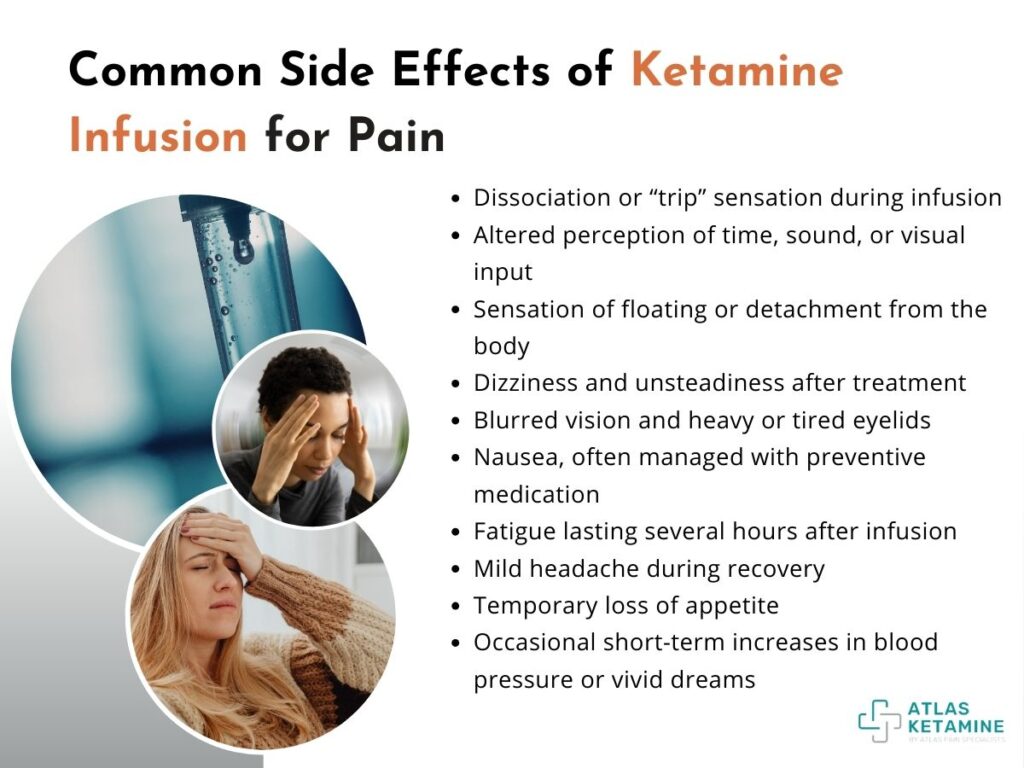
During the Treatment The "Trip" Sensation
Ketamine’s primary pharmacological action involves NMDA receptor antagonism, which disrupts standard neural signaling. This disruption generates a dissociative state that forms a core component of the therapeutic process for pain relief.
The experience, often described as a “trip,” constitutes a predictable neurological event rather than a random occurrence. Medical staff anticipate and monitor this state throughout the controlled infusion.
The Dissociative Feeling
Dissociation under ketamine manifests as a perceived separation from one’s immediate environment or physical self. This state can reduce the conscious processing of pain signals, which contributes to its analgesic mechanism.
- The sensation is transient and dose-dependent, subsiding as the infusion concludes and the drug undergoes metabolism.
- Patients commonly report a sensation of floating or detachment from their body. This mental state allows for a different cognitive relationship with chronic pain.
- Some individuals observe their thoughts from a detached, third-person perspective. This objective distance from somatic sensations can provide psychological relief.
The experience remains subjective, with its character varying between individuals. Standardized monitoring protocols ensure patient safety regardless of personal perception.
Sensory Changes
Ketamine significantly alters sensory processing within the brain’s cortical and thalamic networks. These alterations result in temporary distortions of basic sensory input during the infusion period.
- Auditory perception may become heightened, muffled, or seem distorted. Ordinary sounds in the clinic environment can take on an unusual quality or significance.
- Visual perception often shifts, with colors appearing more vivid or edges seeming less defined. Some patients experience mild visual fragmentation or a sense of panoramic vision.
- The perception of time frequently slows or becomes less linear, making the treatment duration feel extended. This temporal distortion is a well-documented neurochemical effect that resolves post-infusion.
The changes are a direct result of modulated glutamate transmission, a key excitatory neurotransmitter. Their intensity typically correlates with the infusion rate and the patient’s individual pharmacokinetics.
Physical Side Effects Right After the Infusion
The conclusion of the ketamine infusion marks the start of the immediate recovery phase, where the drug's concentration in the bloodstream begins to decline rapidly. This shift often presents a set of predictable, transient physical effects as the nervous system reorients.
Clinicians expect and prepare for these common reactions, which typically peak within the first hour post-treatment. Monitoring during this period focuses on patient stability and comfort as the dissociative effects fade.
| Timing | Category | Specific Side Effects | Typical Duration | Key Management Strategy |
| During Infusion | Perceptual | Dissociation, altered sense of time, sound, or vision, floaty sensation | Lasts for the duration of the infusion | Expected response and closely monitored by clinical staff |
| Immediately After (0–1 hr) | Physical | Dizziness, unsteadiness, blurred vision, heavy eyelids, possible nausea | Peaks and fades within the first hour | Continuous observation, rest, IV anti-nausea medication if needed |
| Recovery Hours (1–24 hrs) | Post-Acute | Fatigue, headache, reduced appetite | Several hours up to the next day | Planned rest, hydration, light meals, approved OTC pain relief |
| Uncommon or Notable | Systemic | Temporary rise in blood pressure or heart rate, vivid dreams or sleep changes | During infusion or the following night | Proactive monitoring, dose adjustment, calm and supportive setting |
- Feeling Dizzy and Unsteady
Residual dizziness and postural instability are frequent results of ketamine's impact on the vestibular system and cerebellar function. This unsteady sensation requires patients to remain reclined until medical staff confirms their stability for movement.
A mandatory observation period in the clinic allows these effects to diminish under professional supervision. Patients must arrange for secure transportation home, as driving remains unsafe for many hours.
The use of assistive devices like a wheelchair for clinic exit is standard practice for safety. Staff provide direct physical support during any initial ambulation attempts.
- Nausea and How We Manage It
Nausea can occur as a direct effect of ketamine on the brain's chemoreceptor trigger zone. Proactive management is a routine part of the treatment protocol to prevent this discomfort.
Pre-treatment administration of antiemetic medication, such as ondansetron, is a common and effective preventive strategy. This significantly reduces the incidence and severity of nausea.
Clinical environments also maintain a quiet, low-stimulation recovery area to minimize triggers. Hydration with small sips of water post-infusion can further alleviate gastric distress.
- Fuzzy Vision and Heavy Eyes
Ocular effects, including blurred vision and ptosis, stem from ketamine's influence on cranial nerves and extraocular muscles. These symptoms create a sensation of visual fatigue and difficulty maintaining focus.
Patients report that their vision seems blurred, as if looking through a faint haze. This effect impedes tasks like reading but resolves comparatively quickly.
A heavy, tired feeling in the eyelids is also common, making keeping the eyes open feel effortful. These symptoms together necessitate a period of rest with the eyes closed during early recovery.
The Recovery Hours Letting It Fade
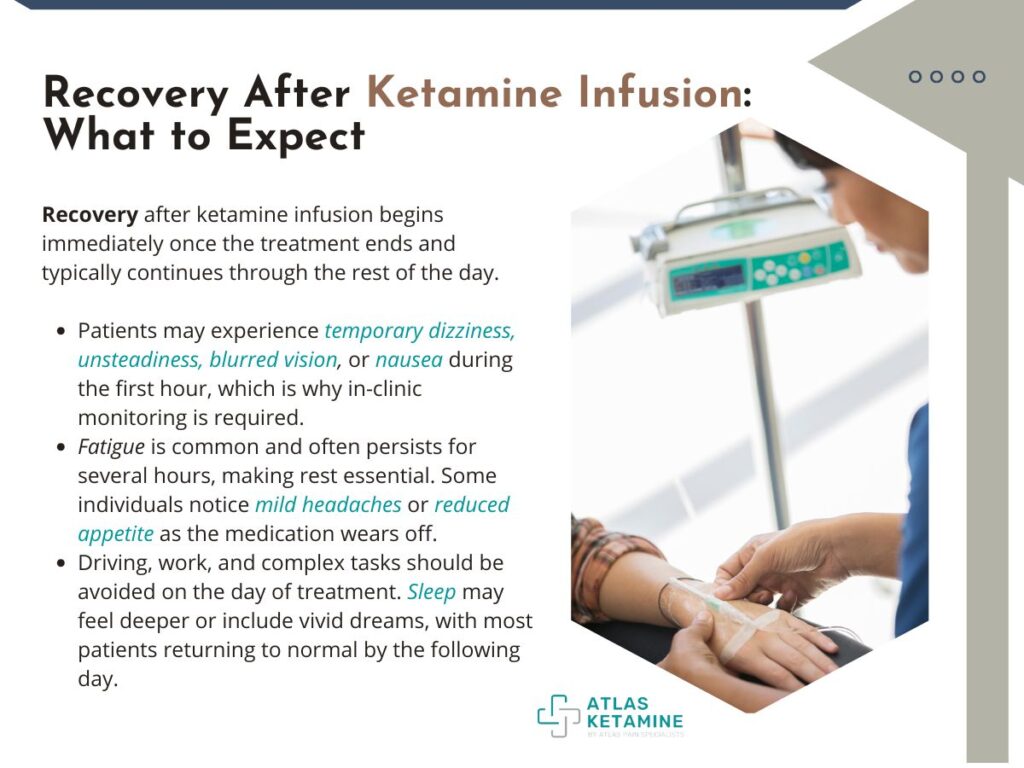
The initial hour after the infusion ends transitions into a longer period of home-based recuperation. This extended recovery phase involves the body's continued metabolism and elimination of ketamine.
Lingering side effects during this time are generally mild and progressively improve. Their management relies on simple, supportive measures rather than medical intervention.
The Lingering Tiredness
A pervasive sense of fatigue often defines the remainder of the treatment day. This tiredness reflects the significant neurochemical modulation induced by the therapy and the brain's subsequent recalibration.
The body requires genuine rest, not just inactivity, to integrate the treatment's effects fully.
Patients should plan for a quiet evening without obligations, work, or complex decision-making.
Sleep often feels particularly deep or restorative during the night following a session. The fatigue typically resolves by the next morning, leaving many patients feeling refreshed.
Headache Possibilities
Some individuals develop a mild to moderate headache as the ketamine concentration drops below a certain threshold. This phenomenon may relate to cerebral blood flow changes or a form of mild medication withdrawal.
Staying well-hydrated before and after the infusion serves as the primary preventative measure. Dehydration can significantly exacerbate this particular side effect.
A simple over-the-counter analgesic, approved in advance by the treating physician, usually provides adequate relief. Retreating to a dim, quiet room can also help manage discomfort until the headache passes.
Finding Your Appetite Again
Ketamine can temporarily suppress the brain's appetite centers and slow gastric motility. Patients commonly report a lack of interest in food for several hours post-treatment.
Forcing a large meal is unnecessary and may worsen nausea. The appetite reliably returns as the drug's effects completely wear off.
Starting with very bland, easily digestible snacks like crackers or toast is the most comfortable approach. Normal eating patterns almost always resume by the following day.
Uncommon but Notable Reactions
While most ketamine infusion experiences follow a predictable pattern of common, transient side effects, a subset of patients may encounter less frequent reactions. These notable occurrences remain within the scope of clinical expectations for the treatment.
Vigilant monitoring and established response protocols ensure these situations are managed effectively. Their infrequency does not diminish the importance of patient awareness and clinical preparedness.
- Temporary Blood Pressure Shifts
Ketamine can stimulate the sympathetic nervous system, leading to potential hemodynamic changes. These alterations typically involve a transient increase in both blood pressure and heart rate during the active infusion phase.
Continuous monitoring of vital signs allows clinicians to detect and respond to any significant elevation immediately. This monitoring is a standard safety practice throughout the procedure.
The medical team can employ various strategies, such as adjusting the infusion rate or administering specific medications, to manage pronounced changes. These effects almost invariably resolve as the infusion concludes and do not indicate a lasting cardiovascular issue.
- Vivid Dreams or Sleep Changes
The neuroplastic and glutamatergic effects of ketamine can occasionally influence sleep architecture in the nights following treatment. This may manifest as unusually vivid dreams or a temporary disruption in normal sleep patterns.
Patients sometimes report dreams with heightened emotional or sensory intensity. This experience is generally considered a neutral byproduct of the brain's processing activity.
Any sleep disturbance is usually confined to the first night after the infusion. Normal sleep hygiene and allowing for extra rest often mitigate this effect, with patterns quickly returning to baseline.
Working With Your Clinic Your Safety Net
A successful ketamine treatment experience relies on a foundation of professional expertise and clear communication. The clinical team serves as an essential partner in navigating both the procedure and its aftereffects.
Their protocols transform potential uncertainties into managed, predictable events. This collaborative relationship prioritizes patient safety and treatment efficacy at every stage.
Communication is Your Best Tool
Providing detailed feedback about all physical and perceptual experiences allows the clinical team to tailor the treatment precisely. This information is valuable data, not merely commentary.
A transparent report of your symptoms, even those that seem minor, enables optimal support. This dialogue ensures the treatment parameters align with your individual response and comfort level.
How Clinics Keep You Comfortable
Treatment environments are specifically designed to mitigate anxiety and manage side effects proactively. Private, calm infusion spaces with adjustable lighting and seating form the basic standard.
Clinical staff employ individualized adjustments to infusion rates and pre-medications based on patient history and real-time feedback. Their constant presence and monitoring are the definitive factors in maintaining both safety and comfort throughout the process.
Types of Ketamine: Different Forms and Their Uses
The side effects of ketamine infusion, while often present, are typically temporary and manageable within a proper clinical framework. This predictable profile supports its considered use for complex chronic pain conditions.
These treatment characteristics are intrinsically linked to the specific pharmaceutical form employed: the intravenous infusion. Different ketamine formulations, such as oral lozenges or intramuscular injections, present unique efficacy and side effect profiles tailored to distinct therapeutic goals.
A comparison of these forms clarifies why the infusion protocol remains the standard for pain management, balancing intensity, control, and duration. The experience of treatment, from procedural sensations to recovery, is fundamentally shaped by this choice of vehicle and route.