
You can't eat before a ketamine treatment because having food in your stomach increases the risk of nausea, vomiting, and aspiration while the medication is taking effect. Since ketamine can temporarily affect your awareness and protective reflexes, fasting helps make the treatment safer and more comfortable. Most healthcare providers recommend avoiding solid foods for several hours before your appointment, though specific fasting instructions may vary depending on the type of ketamine therapy and your individual medical needs.
This article explains why fasting is necessary before ketamine therapy, how long you should avoid eating, what to do if you've eaten before your appointment, and other essential preparation tips, side effects, and aftercare recommendations.
Why Can't You Eat Before a Ketamine Treatment?
Fasting before a ketamine treatment is a standard safety precaution recommended by healthcare providers. While it may seem like a simple instruction, avoiding food before your appointment helps reduce potential complications and allows your treatment to proceed as safely and comfortably as possible.
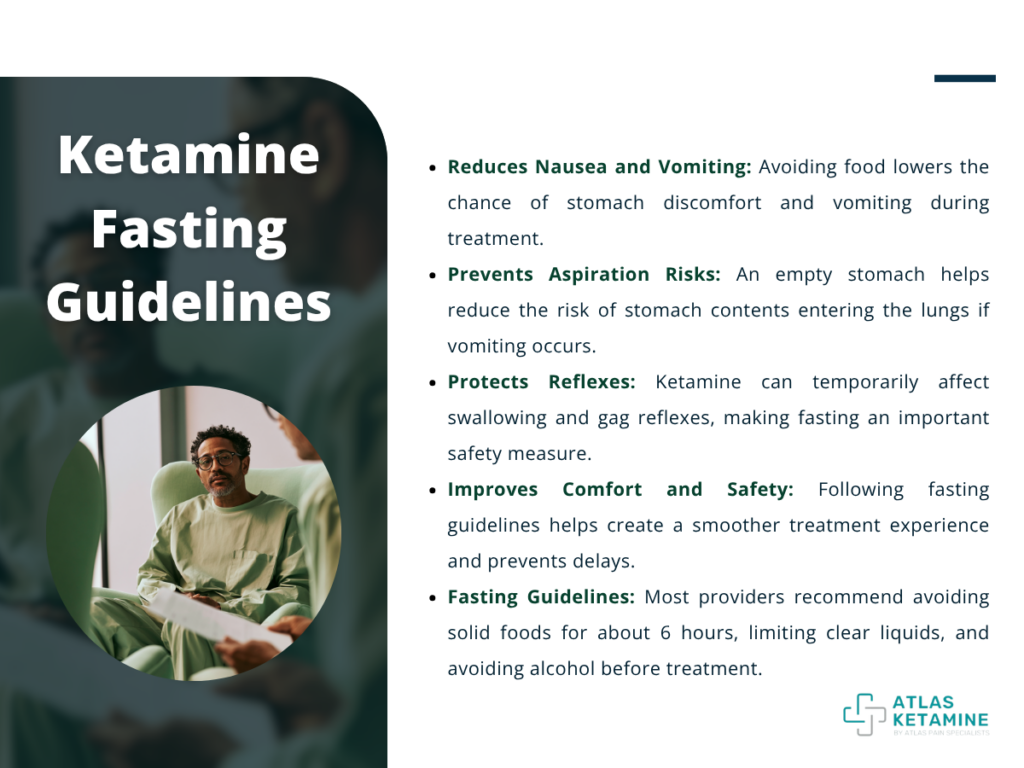
1. To Reduce the Risk of Nausea and Vomiting
Ketamine can cause nausea or vomiting in some patients, particularly during or shortly after treatment. Having an empty stomach helps lower the chances of these side effects and can make your overall experience more comfortable.
2. To Prevent Aspiration
If vomiting occurs while ketamine is affecting your awareness and protective reflexes, stomach contents could accidentally enter the lungs - a condition known as aspiration. Although uncommon in supervised medical settings, fasting significantly reduces this risk.
3. Because Ketamine Can Affect Protective Reflexes
Ketamine may temporarily alter swallowing and gag reflexes, making it harder for the body to protect the airway if vomiting happens. Avoiding food beforehand helps minimize complications while these reflexes are temporarily affected.
4. To Ensure a Safer Treatment Experience
Following fasting instructions helps your healthcare team provide treatment under the safest possible conditions. It also reduces the likelihood of delays or rescheduling if eating beforehand raises safety concerns.
5. To Improve Overall Comfort During Treatment
Receiving ketamine on an empty stomach may help you feel more comfortable throughout the session, especially if you experience dizziness or dissociation. Many patients report a smoother treatment experience when they follow their provider's preparation guidelines.
Avoiding food before a ketamine treatment is primarily about safety rather than improving the medication's effectiveness. By following your provider's fasting instructions, you can help reduce the risk of complications and ensure your treatment is as safe and comfortable as possible.
How Ketamine Affects the Body During Treatment
Understanding how ketamine affects the body during treatment helps explain why fasting is recommended beforehand. The medication temporarily changes how the brain processes information and can affect awareness, coordination, and certain protective reflexes.
Ketamine works by blocking N-methyl-D-aspartate (NMDA) receptors in the brain. This creates a temporary dissociative state while promoting neuroplasticity - the brain's ability to form new neural connections - which is believed to support its therapeutic effects.
During treatment, patients may experience:
- Altered perception of time or surroundings
- Relaxation or mild sedation
- Dissociation (feeling detached from oneself or the environment)
- Dizziness
- Blurred vision
- Reduced coordination
- Temporary increases in blood pressure or heart rate
- Mild nausea in some cases
Because these effects can temporarily interfere with swallowing and gag reflexes, healthcare providers recommend arriving with an empty stomach to help reduce the risk of nausea, vomiting, and aspiration.
How Long Should You Fast Before Ketamine Therapy?
Fasting guidelines may vary depending on your provider and the type of ketamine treatment you receive. However, most clinics recommend the following general guidelines before your appointment:
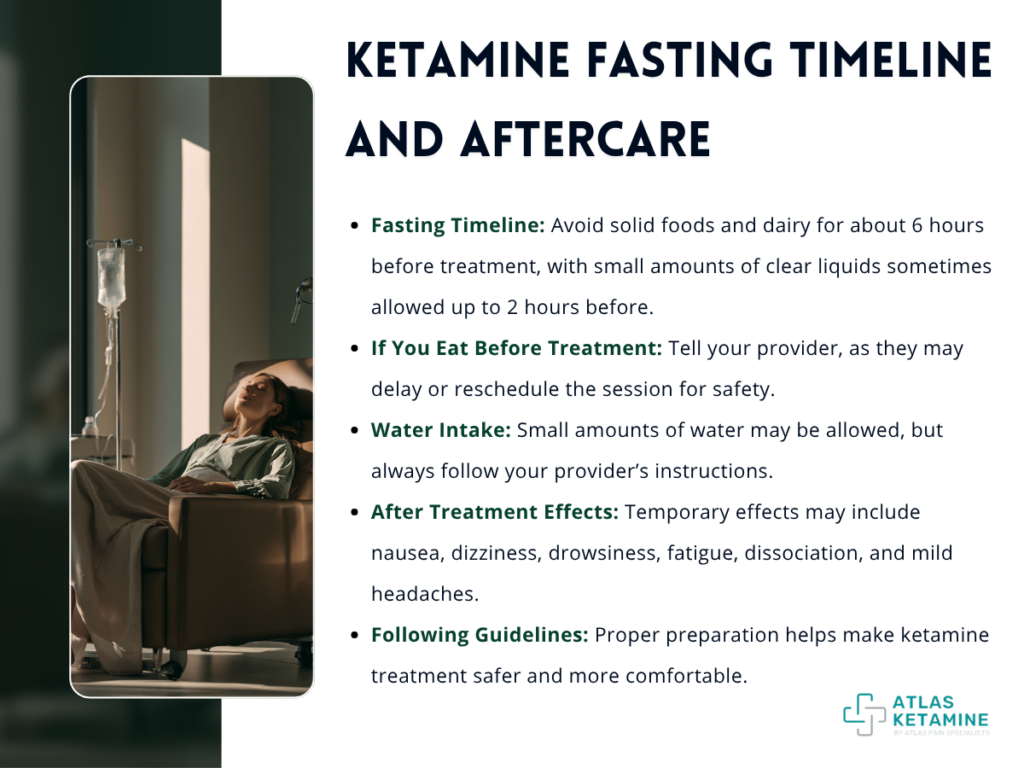
- Solid Foods: Avoid eating solid foods for at least 6 hours before treatment to help reduce the risk of nausea and vomiting.
- Dairy Products: Skip milk, yogurt, cheese, and other dairy products, as they take longer to digest and are often treated like solid foods.
- Clear Liquids: Small amounts of water or other clear liquids may be allowed up to 2 hours before treatment, but always follow your provider's instructions.
- Alcohol: Avoid alcohol for at least 24 hours before your appointment, as it can increase sedation and other side effects.
Following your provider's fasting instructions is one of the easiest ways to help ensure a safe and comfortable ketamine treatment. If you're unsure about what you can eat or drink beforehand, contact your healthcare provider for guidance.
The Standard Fasting Timeline
Most ketamine clinics follow similar fasting recommendations to help reduce the risk of nausea, vomiting, and aspiration during treatment. While exact instructions may vary, the timeline below reflects the standard guidelines followed by many healthcare providers.
| Time Before Treatment | What to Do |
| 6 Hours Before | Stop eating solid foods, including heavy meals and snacks. |
| 6 Hours Before | Avoid dairy products such as milk, yogurt, and cheese. |
| 2 Hours Before | If permitted by your provider, you may drink small amounts of clear liquids like water. |
| 2 Hours Before | Avoid beverages with milk, cream, pulp, or alcohol. |
| Treatment Time | Arrive with an empty stomach and follow all instructions provided by your healthcare team. |
Additional Tips
- Eat a light, balanced meal before your fasting period begins.
- Stay hydrated earlier in the day, unless instructed otherwise.
- If you accidentally eat or drink something outside your fasting guidelines, notify your provider before your appointment.
When in doubt, always follow your clinic's specific instructions, as they may adjust fasting recommendations based on your health and the type of ketamine therapy you're receiving.
What Happens If You Eat Before Your Appointment?
Accidentally eating shortly before ketamine treatment doesn't necessarily mean something dangerous will happen, but it may affect your appointment.
Depending on how much you ate and how recently you ate it, your provider may:
- Delay the treatment until enough time has passed.
- Reschedule the appointment.
- Modify the treatment plan if medically appropriate.
- Evaluate whether it is still safe to proceed based on your circumstances.
It's important to be honest with your care team. Do not skip mentioning that you ate because you're worried about postponing your appointment. Your provider's priority is your safety.
Can You Drink Water Before Ketamine Therapy?
In many cases, yes - small amounts of water are allowed before ketamine treatment. Many healthcare providers permit clear liquids up to 2 hours before your appointment, although recommendations may vary depending on the type of treatment and your individual health needs.
Staying hydrated can make IV placement easier and help you feel more comfortable during your session. However, avoid drinking large amounts of water or any beverages that aren't approved by your provider immediately before treatment.
If your healthcare provider gives you specific fasting instructions, always follow those recommendations, as they are tailored to ensure your treatment is as safe and effective as possible.
Common Side Effects After Ketamine Treatment
Most side effects of ketamine treatment are mild, temporary, and typically resolve within a few hours after your session. Your healthcare team will closely monitor you throughout the treatment and recovery period to ensure you're ready to go home safely.
These may include:
- Mild nausea
- Dizziness or lightheadedness
- Sleepiness or drowsiness
- Blurred or double vision
- Feeling disconnected, detached, or dreamy (dissociation)
- Fatigue
- Mild headache
- Temporary increases in blood pressure or heart rate
While these effects are generally expected and short-lived, let your healthcare provider know if any symptoms feel severe or last longer than expected. They'll provide guidance to help ensure a safe and comfortable recovery.
How to Prepare for Your Ketamine Appointment
Proper preparation can help make your ketamine treatment safer, more comfortable, and less stressful. In addition to following your fasting instructions, keep these simple tips in mind before your appointment.
- Wear Comfortable Clothing: Choose loose, comfortable clothing so you can relax during your treatment.
- Arrange Transportation: Have a friend, family member, or rideshare take you home, as you should not drive after treatment.
- Review Your Medications: Tell your provider about any prescription medications, supplements, or recreational substances you use. Follow their guidance on whether any adjustments are needed before treatment.
- Stay Hydrated (If Allowed): Drink water as directed by your provider, but avoid excessive fluids right before your appointment.
- Get Plenty of Rest: A good night's sleep can help you feel more relaxed and prepared for your session.
Following these preparation tips can help ensure a smoother ketamine treatment experience. If you have any questions before your appointment, don't hesitate to contact your healthcare provider for personalized guidance.
When Can You Eat After Ketamine Therapy?
Most healthcare providers recommend waiting until you are fully awake, alert, and no longer experiencing significant nausea before eating. Once you feel comfortable, it's best to start with light, easy-to-digest foods before returning to your normal diet.
Many patients begin with foods such as:
- Crackers
- Toast
- Rice
- Soup
- Bananas
- Applesauce
If you tolerate these foods well and feel back to normal, you can usually resume your regular diet unless your healthcare provider gives you different aftercare instructions. Be sure to stay hydrated and follow any additional guidance provided by your care team.
Frequently Asked Questions
Here are answers to some of the most common questions about fasting before ketamine treatment.
1. Is fasting required for every type of ketamine treatment?
Not always. Fasting guidelines may vary depending on whether you're receiving IV, intramuscular, oral, or intranasal ketamine. Your provider will give instructions based on your treatment plan.
2. Can chewing gum break the fasting requirement?
Many clinics recommend avoiding chewing gum because it can stimulate stomach acid and may interfere with fasting guidelines. Always follow your provider's instructions.
3. What if I have diabetes or another condition requiring regular meals?
If you have diabetes or another condition that affects your eating schedule, let your healthcare provider know beforehand. They can adjust your fasting instructions to meet your medical needs safely.
4. Will fasting make ketamine work better?
No. Fasting is meant to improve safety by reducing the risk of nausea, vomiting, and aspiration - not to make ketamine more effective.
If you have additional questions about preparing for ketamine therapy, don't hesitate to contact your healthcare provider for personalized guidance.
Key Takeaways
Fasting before a ketamine treatment is a simple but essential step that helps minimize the risk of complications such as nausea, vomiting, and aspiration. By following your healthcare provider's instructions before your appointment, you can support a safer and more comfortable treatment experience.
Knowing how to prepare for ketamine therapy and what to expect afterward can make the process less stressful and help you recover more comfortably. If you have any questions about fasting or your treatment plan, speak with your healthcare provider to ensure you receive guidance tailored to your individual needs.